
Authorised and regulated by the FCA

Commercial Solar Panel Finance

Commercial solar panels let your business generate its own electricity, and commercial solar panel finance spreads the installation cost over fixed monthly payments so the system does not have to come out of working capital.

  • From £1,000 with no upper limit
  • Decisions within 24 hours
  • Over 200 lenders to approach
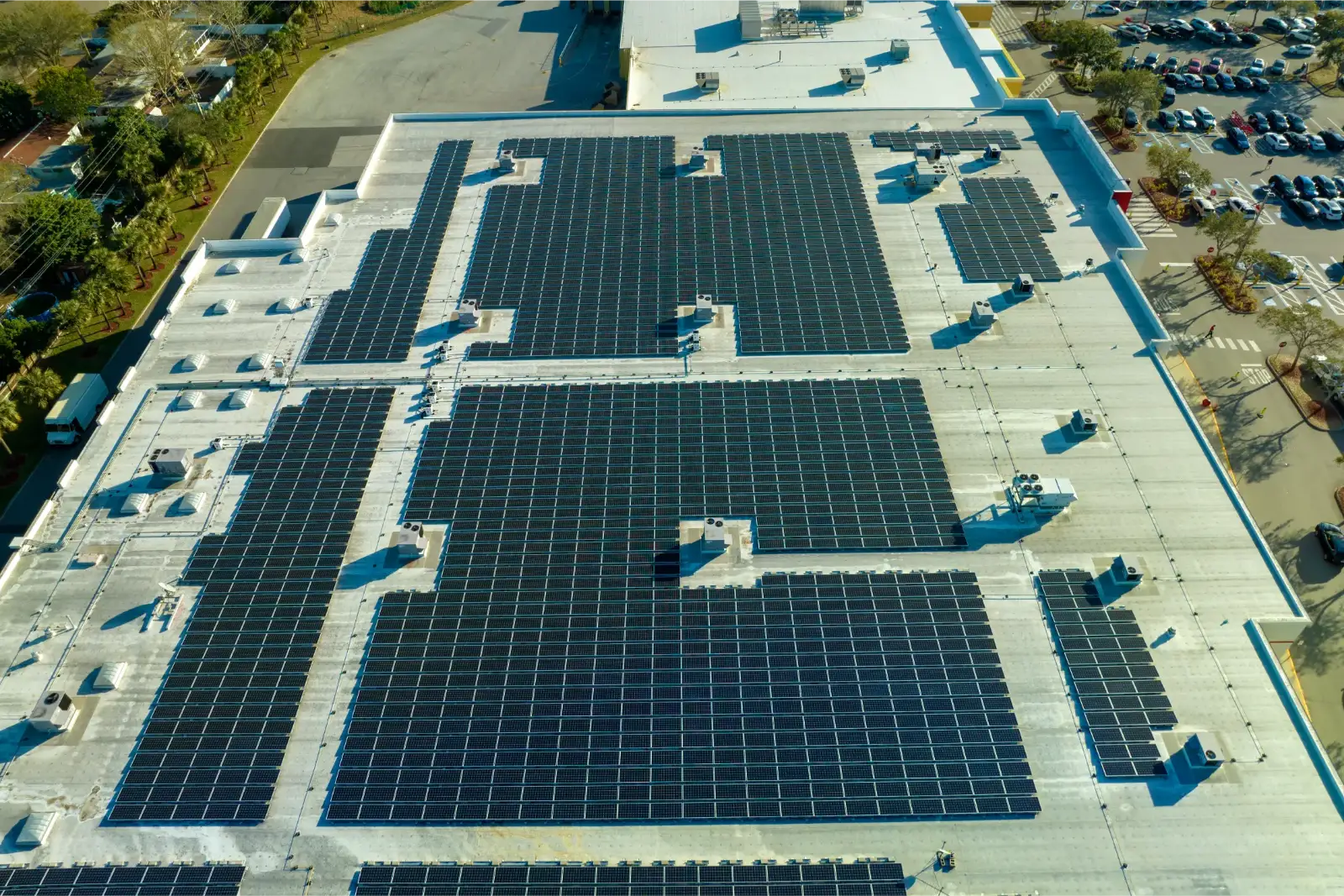
Aerial view of a large commercial building roof covered in rows of commercial solar panels

What solar PV finance can cover

A solar scheme is usually quoted as one package from your installer, and we can place the whole quote on a single agreement. If you are also looking at other ways to cut running costs, see everything else we can finance.

Roof mounted arrays

Commercial solar panels fixed to warehouse, factory, farm building and office roofs, including the mounting frames and cabling.

Ground mounted systems

Larger arrays on spare land or beside a site, for businesses with more space than roof.

Inverters

The units that convert panel output into power your building can use, including string and central inverters.

Battery storage

Batteries that hold surplus generation for use later in the day, with battery storage finance available alongside the panels or afterwards.

Monitoring and metering

Generation meters and online monitoring so you can see what the system produces.

Installation and commissioning

Scaffolding, electrical work, grid connection costs and commissioning, where they appear on your installer's quote.

Matching LED upgrades

Cutting how much power you use goes well with generating your own, so the two projects often sit together.

LED lighting finance

Charging for vehicles

Generating on site pairs naturally with chargers for fleet and staff cars in the car park.

EV charging point finance
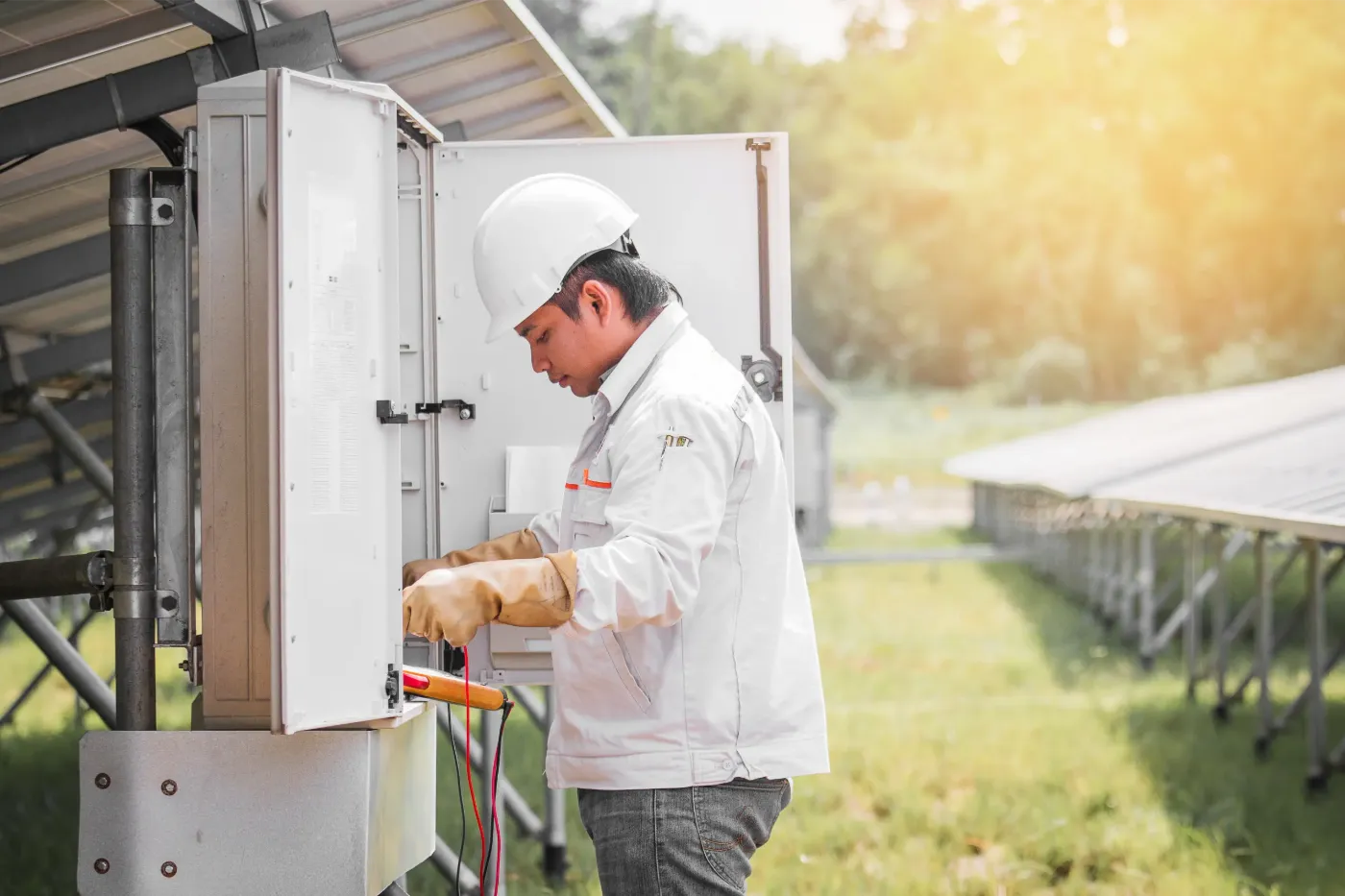
Technician in a white hard hat working on an electrical cabinet beside ground mounted solar panels

Who commercial solar panels suit

Solar works best for sites that use most of their electricity during daylight hours and have roof or land to spare. Here is where we see it considered most often.

Manufacturers

Machinery running all day on large flat roofs.

Warehouses and logistics

Big roof areas and lighting that is always on.

Farms and rural businesses

Barns, sheds and land for sizeable arrays.

Cold storage and food producers

Refrigeration that draws power around the clock.

Hotels and leisure venues

Heating, pools and kitchens with steady demand.

Schools, care homes and offices

Daytime occupancy that matches generation.

Three ways to fund a solar installation

The right structure depends on who owns the roof, how long you expect to stay and how you want to treat the cost in your accounts. For background on selling surplus power back to the grid, see Ofgem's Smart Export Guarantee overview.

Hire purchase

You pay in instalments and own the system at the end. Panels, inverters and batteries sit on your balance sheet from the start.

Best for owners of their building who plan to keep the system for its working life.

How hire purchase works

Finance lease

You rent the equipment for an agreed term at a fixed monthly rental, which keeps the upfront outlay low and the cost predictable.

Best for tenants and businesses that prefer a rental in their accounts.

How a finance lease works

Asset refinance

Release cash from equipment you already own to put towards a solar scheme, while carrying on using that equipment.

Best for asset rich businesses that would rather not use their bank facility.

How asset refinance works

From installer quote to generating power

Projects with commercial solar panels have a survey and design stage before any finance is signed, so we fit around your installer's timetable.

Step 1

Get your design and quote

Your installer surveys the site and quotes for panels, inverters, any batteries and installation.

Step 2

Send us the quote

Share the quote and a few business details, and we confirm how solar PV finance can cover it.

Step 3

Receive a decision

We approach lenders suited to the project and aim to come back within 24 hours.

Step 4

Sign and install

Sign electronically, we pay your installer once the work is agreed and your system goes live.

Example: solar for a distribution depot

A family run distribution business owns its depot and has a large unshaded roof. Its electricity use is steady through the working day, so the owners want a rooftop system with a battery, but they would rather keep their cash for vehicles and stock.

Funding the installation through commercial solar panel finance over a term of several years turns the project into a fixed monthly cost. The business can compare that payment with its current electricity bills before it commits, and our cash flow guide explains why that is useful.

Rental or interest payments can often be offset against profit, and capital allowances may apply on some structures. Your accountant can confirm the position, and our tax relief page gives the outline.

Typical depot package

Rooftop solar PV array with mounting£58,000
Inverters and cabling£9,500
Battery storage unit£14,000
Scaffolding and installation£7,500
Monitoring and metering£1,800
Total funded£90,800

Illustrative figures only. The cost of a real system depends on your roof, your supplier and your usage, and your payment depends on your business and the term you choose.

Commercial solar panels finance questions

Not sure what to ask? Our full FAQs cover deposits, eligibility and how applications work, or you can call the team.

Want to understand the numbers first? Read our guide to what equipment finance costs.

Can I finance battery storage on its own?
Yes. Battery storage finance can cover a unit added to an existing array as well as one installed with new panels. The lender will want to see the supplier's quote and details of your current system.
Do I need to own my building?
Not always. Owners usually find it simpler, but tenants can often fund a system with the landlord's written consent and a lease long enough to cover the finance term. It is worth raising early with your installer.
Does the finance cover installation and grid connection?
Usually, where those costs are itemised on your installer's quote. Scaffolding, electrical work and commissioning can often be included, though some third party grid charges may need to be paid separately.
Should my installer be accredited?
It is a sensible check, and some lenders and export schemes ask for it. Look for installers certified under MCS, and ask your installer what certificate they will provide on completion.
Can a new business get solar PV finance?
Yes, in many cases. Start ups are considered, and lenders may ask for a business plan, a deposit or a personal guarantee. Eligibility depends on your circumstances and is always subject to status.
What happens at the end of the agreement?
With hire purchase the system becomes yours after the final payment. With a finance lease you usually agree the next step with the lender, such as extending at a reduced rental or ending the agreement.

Ready to cost up your solar project?

Send us your installer's quote and we will take it from there.

We will come back with options for your commercial solar panels within 24 hours.