
Authorised and regulated by the FCA

Robotics and Automation Finance

Robotics and automation finance helps manufacturers, food producers and warehouses install robot cells, cobots and automated handling on fixed payments, so labour shortages and rising volumes can be tackled without a large capital outlay.

  • From £1,000 with no upper limit
  • Robots, cells and integration
  • Over 200 lenders on our panel
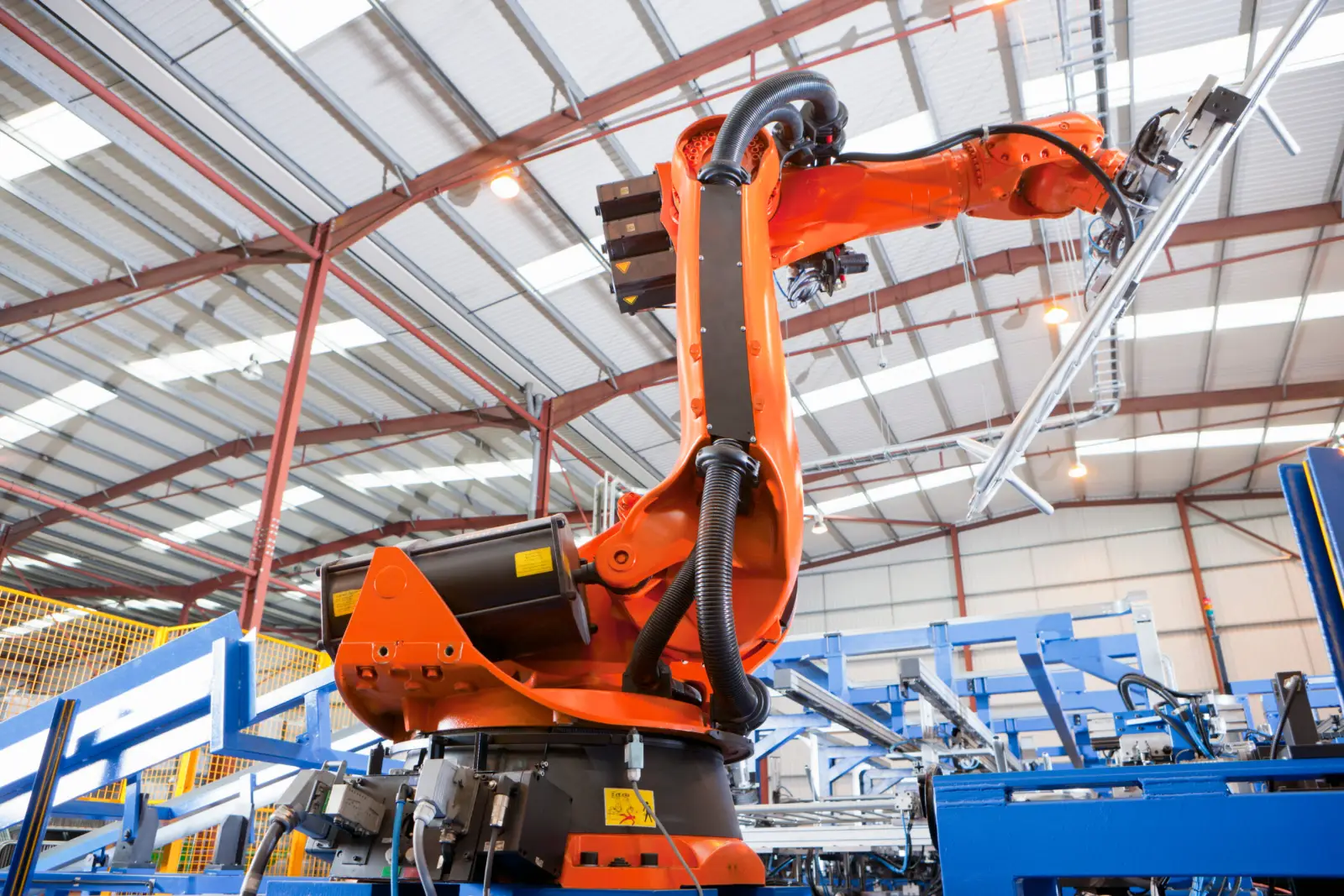
Orange industrial robot arm working in a large factory hall, an example of robotics and automation

Robotics and automation projects we fund

Industrial robot finance can cover the robot itself and everything that makes it work in your building, from guarding to software. Automating machining work? Our manufacturing machinery finance page covers the machine tools the robot will tend.

Industrial robot arms

Six axis robots for handling, machine tending, assembly and painting in production cells.

Collaborative robots

Cobots that work safely beside staff for packing, screwdriving, inspection and light assembly.

Robotic welding cells

Welding robots with positioners, torches, fume extraction and safety enclosures.

Palletising and depalletising

End of line robot cells that stack cases, sacks and crates onto pallets around the clock.

Packaging equipment finance

Pick and place systems

High speed delta and SCARA robots for sorting, picking and loading small products.

Vision and inspection

Cameras, sensors and software that check quality, read codes and guide robots to each part.

Automated guided vehicles

AGVs and autonomous mobile robots that move materials between stores, lines and despatch.

Warehouse equipment finance

Controls and integration

PLCs, HMIs, programming, guarding and installation by your integrator, funded with the hardware.

Software finance
Yellow industrial robot arm beside a machine control panel in a production cell

Who invests in automation equipment

Automation equipment finance is no longer only for large plants. Smaller manufacturers now use it to win repeat work, cover hard to fill roles and keep quality consistent from shift to shift.

Engineering subcontractors

Robots tending CNC machines overnight.

Fabricators

Welding cells for repeat batch work.

Food and drink producers

Hygienic pick, pack and palletising robots.

Plastics and moulding

Part removal and trimming at the press.

Warehouses

Mobile robots and automated picking.

Electronics assembly

Precise pick and place and inspection.

Three ways to pay for robotics and automation

The best agreement depends on the life of the cell and how quickly the technology in it is likely to move on. Manufacturers can also explore the government backed Made Smarter programme, which supports the adoption of digital and automation technology.

Hire purchase

Own the robot and cell after the final instalment. Suits hardware with a long working life that you plan to redeploy as products change.

Best for robot arms, welding cells and palletisers.

How hire purchase works

Finance lease

Fixed rentals with the option to upgrade at the end of the term. Rentals are usually an allowable business expense.

Best for vision systems and fast moving technology.

How a finance lease works

Asset refinance

Raise capital against machinery you already own to part fund the robot, keeping both in daily use.

Best for owners funding a first automation step.

How asset refinance works

From integrator proposal to a working cell

Automation projects involve design, build and testing, so we structure robotics finance to fit the integrator's timetable as well as yours.

Step 1

Share the proposal

Send the integrator's proposal, including the robot, tooling, guarding, software and installation.

Step 2

We present the case

We explain the project to lenders who understand automation and how it pays its way.

Step 3

Approve and sign

Pick the offer that suits you and sign online. Stage payments can sometimes be arranged.

Step 4

Cell goes live

The lender pays the integrator, and your cell is installed, tested and handed over.

Example: a robot tending two CNC machines

An engineering subcontractor has two CNC machines that stand idle overnight because there is nobody to load them. A robot cell with a gripper, guarding and a parts table would let both run unattended through the evening shift.

Through robotics and automation finance over five years, the cell is paid for from the extra machine hours it unlocks, and the cash stays available for materials and tooling. Our guide to asset refinance shows how existing machines can help fund the step.

Payments can often be offset against profit, which our tax relief page explains, and why asset finance suits growing firms sets out the wider case.

Typical machine tending cell

Six axis industrial robot£42,000
Grippers and tooling£8,000
Safety guarding and scanners£12,000
Parts table and fixtures£6,000
Programming, installation and training£17,000
Total funded£85,000

These figures are illustrative. The real monthly cost depends on the lender, the specification and the length of the agreement.

Engineering businesses we have funded

A manufacturer that used CLS to invest in its workshop.

Robotics and automation finance questions

More general answers on terms, deposits and eligibility are in our full FAQs.

Struggled to get funding from your bank? Read why your high street bank said no.

Can industrial robot finance include programming and installation?
Usually, yes. Integration, programming, guarding and training can normally be included when they are part of the integrator's quote.
Is a collaborative robot cheaper to fund than a full cell?
Cobots are often smaller projects because they may need less guarding, which can make the agreement simpler. Finance starts from £1,000, so both are possible.
Who is responsible for robot safety?
Your integrator designs the safe system and you remain responsible for using it safely. The HSE's guidance on work equipment and machinery is a useful starting point.
Can I fund a used or redeployed robot?
Some lenders will fund reconditioned robots from recognised suppliers, with the term reflecting age and condition.
Can automation be funded alongside packaging machinery?
Often, yes. A palletising robot and the wrapping and labelling kit around it can sit on one agreement, as our packaging equipment page explains.
Is robotics and automation finance open to smaller firms?
Yes. Many of our lenders work with small and medium sized manufacturers, and a clear view of the hours or labour the robot will save helps the application.

Ready to automate your next process?

Send us your integrator's proposal or describe the task you want to automate.

We will look for robotics and automation funding and reply within 24 hours.